

Trusted by top organizations worldwide


Trusted by top organizations worldwide
The case for inclusion
is enduring.
The path to impact
has changed.
In an age of AI and global uncertainty, capabilities such as building trust, exercising sound judgement, adapting to change, fostering human connection and belonging, collaborating effectively and navigating disagreement constructively are more critical than ever.
These are fundamental to the behaviours of high-performing, inclusive leaders and teams — and help explain why 90% of global leaders continue to see inclusion as a strategic priority.
Yet advancing inclusion has become more complex. Challenges include:
01
Inclusion is facing resistance
In some regions, inclusion is under pressure and momentum is hard to sustain. The approaches that last will frame it in ways that resonate broadly, positioning it as essential to healthy, high-performing cultures and part of what it takes to lead and work effectively in a changing world.
02
AI investment risks crowding out investment in people
As AI investment grows, developing human capability can fall down the agenda, just when it matters most, because overreliance on AI can dull critical thinking and creativity. Curiosity, constructive challenge and collaboration, all core inclusion behaviors, keep people thinking, questioning and learning, and deserve equal attention.
03
Inclusion has often sat on the sidelines
Historically, inclusion has often run as a standalone program, separate from how leaders lead, teams work and decisions get made. To take hold, it needs to be built into everyday work and reinforced by the systems and processes that shape behavior – so it just becomes part of the way things are done.
04
Aspirations are too broad to act on
Commitments to inclusion often feature in organizational values statements and leadership competency frameworks, but can be difficult to translate into everyday action. Without clarity on the specific leadership and team behaviors that matter most, people are left unsure of what is expected of them, and impact is diluted.
05
Knowing isn’t the same as doing
One-off workshops can build understanding but rarely change habits. Closing the knowing–doing gap takes self-awareness, motivation, targeted practice and reinforcement over time, and it has to happen at scale for culture change to take hold.
06
Impact is hard to prove
Like many forms of leader and team development, the impact of inclusion can be hard to demonstrate. It means tracking whether behavior actually changes and connecting that change to tangible people and business outcomes.

Our solutions
2.8M+ behavioral intelligence engine
across two connected solutions
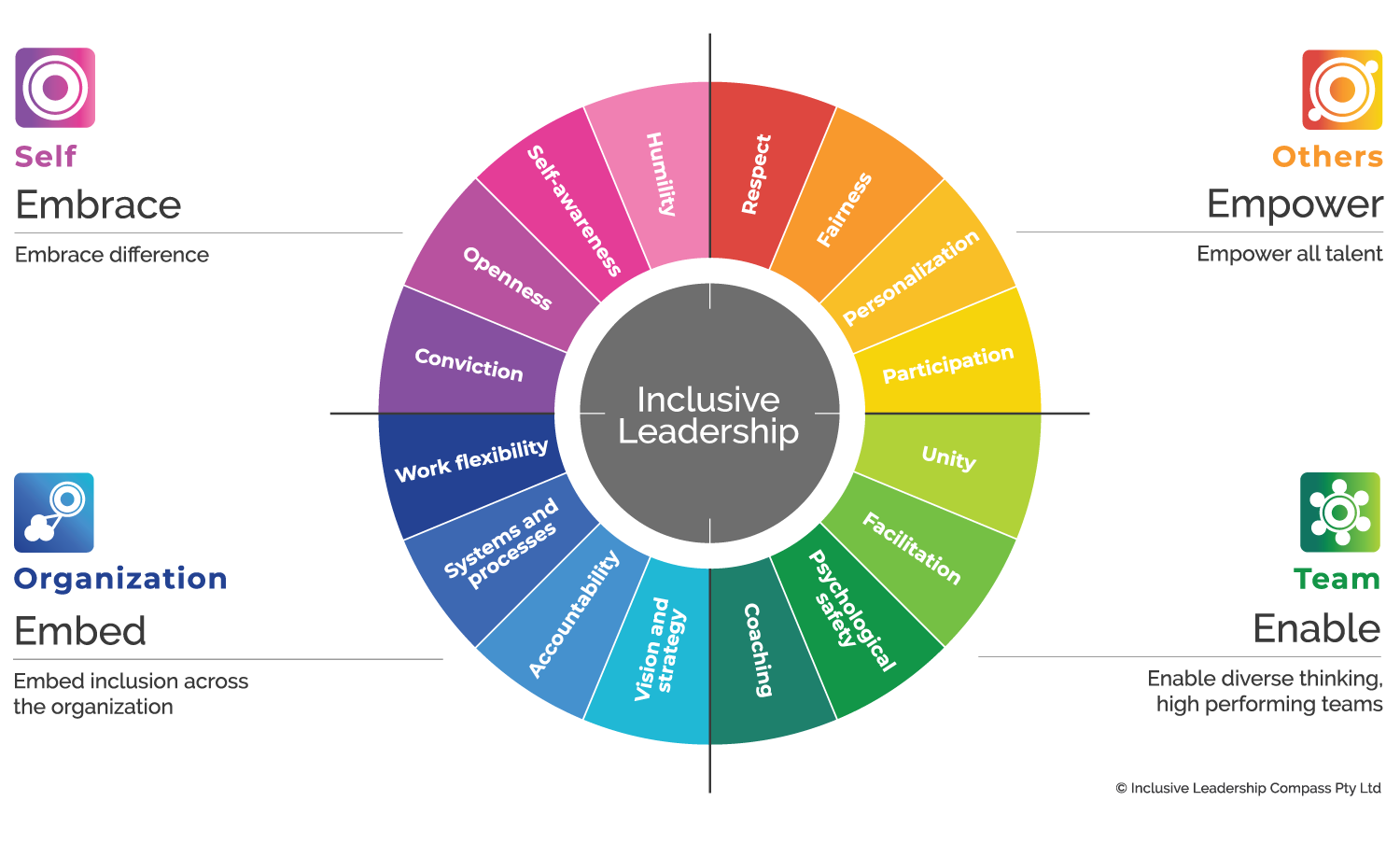
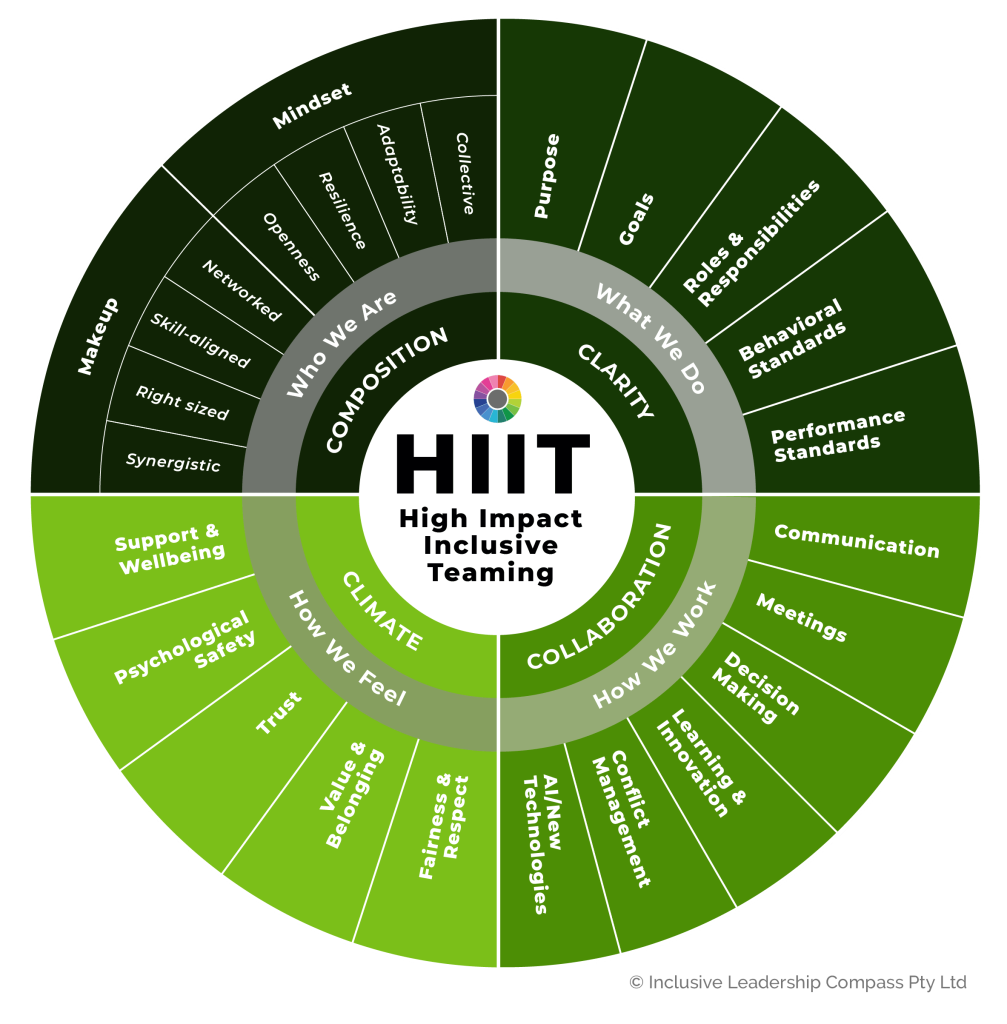
ILC brings together two research-backed solutions — one for leaders, one for teams — each built on its own validated model, with a connected suite of assessments, action libraries and scalable development experiences, informed by our 2.8M+ behavioral intelligence engine. Both solutions map to a proven five-stage methodology that helps leaders and teams move from insight to sustained behavior change.
How ILC creates performance impact
Our Global Reach
The Inclusive Leadership Compass™ partners with organizations worldwide, delivering impactful solutions that resonate across different geographies. Through our network of highly experienced, multi-lingual executive coaches and facilitators, we ensure a consistent but localized approach to scaling inclusive capability.
Below shows the major regional hubs for our Associates. Please contact us for insight into how we can service geographies outside of these.


“The ILC’s framework and tools are a pivotal part of our approach to building the inclusive capability of our leaders, employees and volunteers and delivering on our mission. Feedback from program participants has been resoundingly positive. We value our partnership with the ILC Team.”
Adrienne Albert
Chief Diversity Officer, American Red Cross


